Acting in Covenant
There are those moments when you decide. It might be buying a car, or a house, or applying for a new job, or those moments based upon relationships – asking someone out, or being asked. There’s usually something – even at the back of your mind – which acknowledges that this may well change your
There are those moments when you decide.
It might be buying a car, or a house, or applying for a new job, or those moments based upon relationships – asking someone out, or being asked. There’s usually something – even at the back of your mind – which acknowledges that this may well change your life.
It’s because there is a sense of risk: what if it doesn’t work? What if he says no? What if it does work – what happens then? So we take account of the risks, of the possibilities and probabilities, and we decide.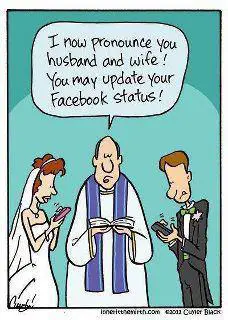
Fiona and I celebrate thirty years of marriage this year, and I believe it would not be unfair to say that what we imagined three decades ago and what we have realised now are pretty different. All the planning and assessment have come second to the risk we took, based in love and hope.
Like so many things, it’s a risk, because we don’t – and can’t – know what is ahead, but it’s a decision we make together.
There are these decisions throughout Scripture. They are made by human beings of varied strength and character, and they are made by God. God makes promises to many of the Old Testament characters – to Sarah and Abraham (descendants), to Noah after the flood (safety), to Isaac and Jacob and Moses and all the people of Israel (I AM WHO I AM). It’s considerably more than a promise, it’s covenant.
There’s a sense of words written in stone (ten commandments), or words written on our hearts (Jeremiah 31.31-34), or affirmation stamped in the sky like the rainbow.
When God makes the covenant with us, God declares not just a sense of hope and love, but God’s intention to fulfil the covenant which has been made – loving in order to save; remaining faithful in order to save; forgiving in order to save; being with us.
The covenants we make – marriage, baptism, holy communion, ordination, our decision to follow Jesus – are all echoes, even parables, of the covenant which God makes with us.
God’s greatest covenant is declared and enacted in Jesus. The reality that God chose to make that promise reflects the risk he takes with us, to love, call and forgive us. The covenant prayer we make today simply and wonderfully reflects the act of God in Jesus Christ. 
Is there anything we risk in saying this which God has not already risked with us and all creation? We can see the prodigal son in this Covenant Prayer and John the Baptist; we can hear Paul’s story and the journey of Ruth and Naomi. Above and through it all we recognise the life of the crucified and risen Christ.
Covenant is not stagnant, it is the expectation of the marriage vow that there will be days of wealth and poverty, of health and sickness, of our best and our worst, and that we will learn to love through it. Covenant changes us, as the ordination vow places our lives at the disposal of God – the promise we hear for infant and adult at baptism.
Covenant is the grace of God, holding us, urging us, reminding us, calling us, forgiving us, blessing us. This prayer we make on this weekend will not leave us unchanged; we risk ourselves in the grace of God.
And God, once again, risks everything with us.
Our Covenant Service
The Covenant Prayer below was first written by John Wesley, one of the founders of the Methodist Church in the 18th century. It remains one of the most stirring and challenging statements in the history of our Church.
I am no longer my own, but yours.
Put me to what you will,
rank me with whom you will;
put me to doing, put me to suffering;
let me be employed for you or laid aside for you;
exalted for you or brought low for you;
let me be full, let me be empty;
let me have all things, let me have nothing;
I freely and wholeheartedly
yield all things to your pleasure and your will.
And now, o glorious and blessed God,
Father, Son and Holy Spirit,
You are mine and I am yours.
May it be so.