Dealing with Oxymorons
We had a great conversation in worship a few weeks ago, during our acronym driven MGEM (multi-generational-educational-moment). We asked about the prophet Amos and the issues he was raising – and railing against – for the people of Israel. Several people noticed that many of the topics which arise…
We had a great conversation in worship a few weeks ago, during our acronym driven MGEM (multi-generational-educational-moment). We asked about the prophet Amos and the issues he was raising – and railing against – for the people of Israel.
Several people noticed that many of the topics which arise from the prophets (there’s a whole stack of them at the back end of the Old Testament) resonate very loudly today, and have since Amos and his mates first spoke them. The intention of God to advocate for those on the edges, for those whose relationships are broken, who are pushed to the fringe financially, who are strangers in a community, or who are crushed by unfair structures, is declared again and again.
The refrain “the widows and the orphans” occurs throughout Scripture as the measure of how well our community car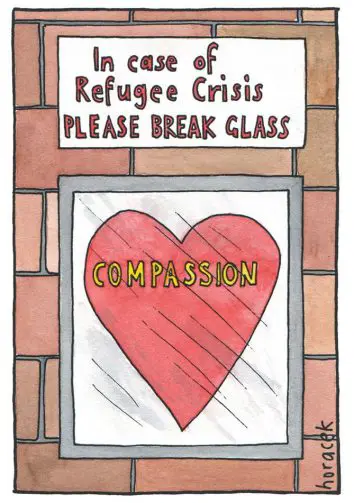 es for those who are most in need.
As we move briefly into the prophet Isaiah, this week and last week, we notice how issues that are current now were just as current then. The injustices in Israel included a housing shortage through a form of advanced negative gearing, or gentrification which appears to be out of control, “you who join house to house … until there is room for no one but you …” [Isaiah 5.8-10] and people are binge drinking from early in the morning.
It’s the next part which captured my eye and causes me to wonder if this challenge is always true. You who call evil good and good evil, who put darkness for light and light for darkness… is this not what we feel so often at the moment?
As a leading politician deliberately conflates ISIS and Barack Obama, in order to cause fear and to win an election; when powerless people on Nauru are accused of bullying our government by setting themselves on fire; when gambling is proposed as being positive for our economy, have we not reached a point where evil is named as good, and good as evil?
The reasonable person asks “How can good be called evil?” And yet, here we are. A child is imprisoned, abused and victimised and we tell each other that she is safe, under our protection, or that by being a victim, she threatens us.
What would Isaiah, or Amos, or Hosea, say? What does the Gospel say?
Shouting in anger and horror is not sufficient. The Gospel invites us to protest for those who are voiceless and hopeless, but Jesus invites us to even more. We need to declare another way of living, of life, as disciples of Jesus.
We welcome people into our lives, our homes, our churches, our co mmunity, because we have first been welcomed by God. The whole Gospel is God, in Jesus, seeking to welcome us home.
We risk ourselves in love and justice, because that is precisely how God in Jesus acts towards us. The risk God took – and takes – to love, forgive and save us is beyond our measure, beyond our hands to hold.
We challenge our community and each other to live this way, because Jesus challenged his community to forgive, to welcome and to embrace those who had been told they were beyond forgiveness, welcome and love.
We stand in prayer before our leaders saying “no!” to vast injustice, because Jesus stood before Pilate, Herod and the high priests, saying almost nothing, yet saying everything.
We are disciples of a God who saves. Let us live the truth of Jesus Christ.