Eucalypts & Our Evangel
In our garden, we have a eucalyptus caesia, a Silver Princess gum. It has grown in a delightfully eccentric, pendulous shape, and has beautiful, striated bark. The Silver Princess also produces stunning crimson, bell-shaped flowers. Or so we’re told. When our eucalyptically-wise neighbours visit…
In our garden, we have a eucalyptus caesia, a Silver Princess gum. It has grown in a delightfully eccentric, pendulous shape, and has beautiful, striated bark. The Silver Princess also produces stunning crimson, bell-shaped flowers. Or so we’re told.
When our eucalyptically-wise neighbours visit, they tell us that the Silver Princess takes a few seasons to put forth flowers. Okay. When the native plant society wander through, they encourage us to be patient and water it more. Or less. Be patient. Uh huh.
When our friend from a native plant nursery was consulted, she said “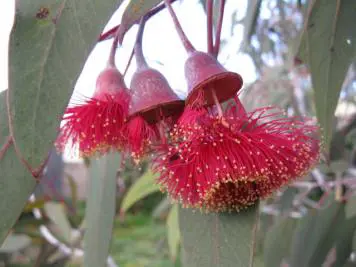 Cut it back to about a foot above the ground and it will grow back; then you’ll probably get some flowers”. Over our dead bodies.
When Jesus tells his parable about the fruitless fig tree in Luke 13, what do you think he is saying? Is God present in the parable, as owner, or gardener? Is Jesus placing himself in the midst of the story, as advocate? Is the fig tree only valuable because of the fruit it can produce, or is there something more to be said, or is the fig tree simply taking up space?
We can be impatient for justice, as we perceive it, impatient for hope, or healing. In our world right now, many of us are impatient for those who suffer, or desperate for resolution of structures which create victims and brokenness. When we draw attention to those events, Jesus invites us to look at ourselves as well – how we live, how we articulate our faith.
The impatience we have with injustice is, I believe, a reflection (a hint?) of godly impatience. We cannot, however, ignore our own role in our world. How faithfully the Spirit of God is working with us, drawing us to real repentance, urging us to turn our lives towards Jesus.
As we cry out for God to act, Jesus reminds us that we are neither spectators, nor prayerful observers in this life. Are we worried about refugees? Then offer sanctuary. Are we worried about the place of marriage in our community? Then strengthen your own and others’, with generosity and love. Are we worried about bullying? Then confront the bully, or stand with and beside those who bear the brunt of injustice.
What signs are we bearing of the Spirit’s urging?
One of the Awkward Crowd
Theologically speaking, I’m one of the awkward squad,
always asking questions
or questioning answers;
it’s uncomfortable for all concerned,
especially me.
I wish it wasn’t so;
wish I could tuck myself up in tradition,
snuggle down into certainty,
learn to trust,
but I don’t know how –
don’t even know what a God-word means to me now.
I do know love when I meet it though.
Oh yes, I recognise Love.
Francis Copsey
“Eggs & Ashes” © Wild Goose Publications 2004