Growing Our Prophet
The extraordinary Father Rod Bower, priest at the Gosford Anglican Parish, is responsible – with his Congregation – for some challenging actions, not least the well-publicised sign outside their local church. (Just google it…) Fr Rod and several of his Congregation and other members of the…
The extraordinary Father Rod Bower, priest at the Gosford Anglican Parish, is responsible – with his Congregation – for some challenging actions, not least the well-publicised sign outside their local church. (Just google it…)
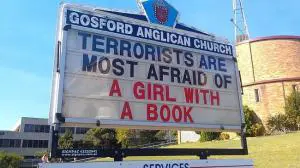 Fr Rod and several of his Congregation and other members of the community, were engaged in a silent protest recently at a function where the Prime Minister attended. As a mark of their protest, they turned their back on Mr Abbott upon his arrival.
It caused quite a storm in the local media and a slight hiccough on the net.
One of the pertinent comments made asked “How do we make our voices heard in this day and age, when we want to protest above the noise of everything else?”
How do we speak God’s word into our world?
Jeremiah, Ezekiel and their mates were asked to do extraordinary things to declare God’s concern: some were physically demanding tasks and Hosea was even required to marry a prostitute to symbolise God’s displeasure at the way Israel had wandered from God’s call.
This article is not advocating choices of that nature (sighs of relief), but asking how we can speak. Fr Rod and his friends have achieved considerable attention for their gospel-centred concerns … even by risking the acrimony of many people because they have not behaved in the way people expect (demand?) of them.
Is their “back-turning” not a reflection of the way in which prophets have always challenged the ruling powers, the “royal consciousness”? Samuel wasn’t soft with David, nor were Elijah and Elisha with the monarchs of their time.
However, the gospel is not about pointing out fault – it’s about identifying our hope in Jesus Christ.
I refuse to accept our 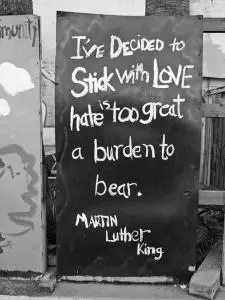 society as a culture of punishment because I believe that God seeks to heal, forgive and reconcile. This belief articulates how I act toward others, even when I fail in the attempt. It’s not enough to name my refusal; I have to live out my hope. (At this point, many people are thinking of “worst-case scenarios” and seeing me as naïve, but that is not the case.)
When I refuse the parliament’s attempts to remove people’s citizenship, I need to name my belief first in the call for justice upon those who commit crime, and my hope that everyone can be redeemed, that forgiveness restores life and relationship and is not some gimmick to eschew responsibility.
When we confront the evil of domestic violence, I name my belief in the healing which is possible for those who are victims, and the possibility that those who commit those crimes can eventually be restored, even as they face justice. This is not some simple magical statement, but the hope founded in Jesus, and the life he lived.
I want to challenge the rulers of our world because the only hope I have is found in the kingdom of God. I believe that forgiveness brings life, that sacrifice is sometimes necessary in order to discover hope, that love is not some sickly astringent thing, dissipated by movie and social media, but the only way in which God will restore the creation. The cross is not about God’s punishment, it is about God’s sacrifice, God’s forgiveness and God’s love.
It is about God’s hope – found first and last – in Jesus Christ.
Grace and peace for your next prophetic act!