I’d Like An Argument, Please
There’s been the predictable kerfuffle around Senator Hanson’s first speech in the new Senate. Predictable, in that she deliberately said provocative and demeaning things about people with whom she believes she disagrees. Predictable, in the way some politicians and media responded by walking out of…
There’s been the predictable kerfuffle around Senator Hanson’s first speech in the new Senate.
Predictable, in that she deliberately said provocative and demeaning things about people with whom she believes she disagrees. Predictable, in the way some politicians and media responded by walking out of her speech, or criticising her afterwards. Predictable, in that the anger she fuels is real for many people in our community, because of the injustice – real, or perceived – which they experience.
Does this predictability create anything hopeful for our community? Does Hanson’s diatribe, the Greens’ protest and others’ criticism move the ball one metre forward? This is the equally predictable path – that we shout at each other about our inherent rightness and others’ equally inherent wrongness, clinging desperately to the belief that we will eventually triumph.
What does the 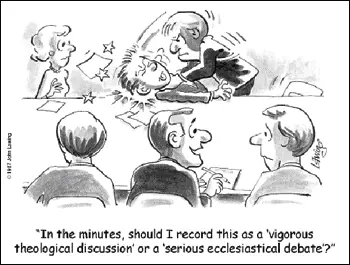 church’s voice sound like in conflict and debate? What role do we have in our community’s concerns about race, or justice? How do we maintain our faithfulness to the Gospel of Jesus in both what we debate and how we debate?
Our community needs us to offer wisdom and leadership in troubling issues. This does not mean shouting from the sidelines; it means engaging with people, and working through these things together by offering compassion and hope. It is not sufficient to quote bible verses; we have to show how our faith in Jesus makes sense of our lives, and how our lives are a constant attempt to work out our faith.
As our community moves into decisions about same-sex marriage, the church cannot simply – and selectively – quote Leviticus, or Paul, and dismiss the conversation. We can’t talk broadly about a God of love, without mentioning holiness and discipleship in a changing world. It’s not sufficient to argue based on anecdotes: “I know a gay couple and …“, as if one experience is sufficient for an entire argument. How the church understands relationships and marriage in 2016 has many different aspects to our grandparents’ faith and community traditions.
Neither can we be led by our community; we need to shape our thinking because of our faith in Jesus Christ.
What’s vital is how we have the conversations. How we care for each other, how we love each other, how we suffer together, how we disagree with respect and how we affirm each other’s value because of Jesus. What does it mean when we affirm that everyone is created in the image of God and loved, that all humanity is caught up in the hope of Jesus’ life, death and resurrection?
We must begin and continue this conversation in the grace of God. It is where we begin and where we are made whole.