In Whose Hands?
You’ve got the whole world in your hands is the creative new ad on the ABC about the quality of their news and information. Some folk have been disgruntled about the appropriation (or misuse) of the old Gospel song, but I am continually caught by the images of hands from around the world, which are
You’ve got the whole world in your hands is the creative new ad on the ABC about the quality of their news and information. Some folk have been disgruntled about the appropriation (or misuse) of the old Gospel song, but I am continually caught by the images of hands from around the world, which are updated as our news changes.
If we push beyond a clever ad, (because now you’re all humming that tune as you read this…) we step gingerly into a social and theological heresy. It’s all in our hands … we can fix this … it’s up to us. it’s the self-improvement slogan which inspires us to work harder, or to become healthier and that, in itself, is a good thing.
But it’s when we think it’s all in our hands and we can fix it – whatever it is – that we stumble and eventually fall.
The human slogan in the US presidential race stated last week “I will fix this” – poverty, fear, immigration, employment – and many people, desperate for hope and safety, applauded. The inherent deceit echoes with our self-deception: it’s entirely up to us.
When Jesus invokes the image of the rich fool in his parable, we see a man who is convinced that his soul is in his own hands. And I will say to my soul, “Soul, you have ample goods laid up for many years; eat, drink and be merry.”
There is surely a comment to be made about capitalism, or the Coles-Woolies duopoly, or superannuation discounts, or debt in the developing world. I think that’s vital, but at this moment, I’ll leave it to others.
Whether it’s building bigger barns, or saving the church, we often have the conversation with ourselves and not with God. When we imagine that it’s entirely up to us to save either money or souls, we miss why we are here at all. When our only conversation is with ourselves, or with those whose primary task is to enhance our frailties, or to confirm our false ideas, or our fears, then however we much we claim to have achieved, we are in poverty.
The fool with his barns is firmly convinced that he has saved himself. The temptation for us is to believe we can do likewise. If we are good enough Samaritans, or repentant enough prodigals, we can save our own souls.
How does God call us? To what does Jesus invite us? Where does the Spirit urge us to be present?
If we worry enough about tomorrow, or boast loudly enough about today, we can shut out the whisper of God’s call. This is the call to consider those whose hunger is for justice and peace, as well as bread.
However, our actions begin in our hope in Christ, not our confidence about ourselves or desperation about the world around us.
We pray and act because of what God has proclaimed in Jesus. We pray and act because of the nudging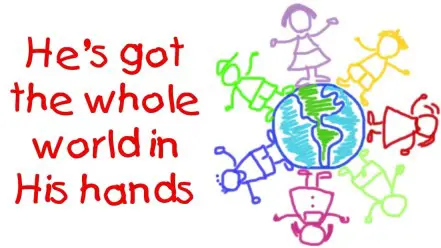 of the Spirit who has always hovered over creation’s chaos. We pray and act because the world is held in God’s hands and not in our ours.
God’s call, Jesus’ invitation, the Spirit’s urging, is to participate in hope; God’s word is the first and last word. God’s word assures that we are already saved for the future, and in this hope we serve those around us. When we grieve at violence, when we watch systemic injustice, we hold to the hope we know in Jesus. If it’s in our hands alone, it will slip through our fingers.
In God’s hands, our creation is not only shaped, but made whole, in God’s hope, declared in the crucified, risen Christ.