Myth Keepers & Peace Makers
Ever since leading my first ANZAC Day Service, in the village of Eumungerie nearly twenty-five years ago, I have wondered what needs to be said and how to say it. I am a member of the generation which less readily observed ANZAC and Remembrance Days, and I never attended the services, either through…
Ever since leading my first ANZAC Day Service, in the village of Eumungerie nearly twenty-five years ago, I have wondered what needs to be said and how to say it.
I am a member of the generation which less readily observed ANZAC and Remembrance Days, and I never attended the services, either through my school or community.
In the last three decades, there has been a resurgence of interest, of engagement with the ANZAC story, so that much of the event has attained almost the character of myth – a story which has elements of truth and fantasy, which is told to explain ourselves, our history, our purpose, our place in the world. The actor Sam Neill argues that this be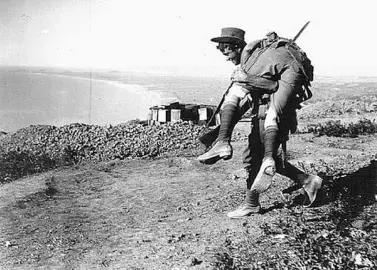 gan with the film Gallipoli, and the poignant, appalling final scene, encapsulated in the frozen moment of the hero’s death.
We acknowledge the sacrifice and courage of so many – as we should – while at the same time decrying the evil injustices of war – once again, as we should. It’s always awkward to praise the soldier and damn the war, without one infecting the other. We should continue to make the attempt.
In recent times, there have been more stories about the crippling effects upon soldiers, and upon those who support them. The ANZACs who returned emotionally and mentally crippled and their families who bore the brunt of loss and brokenness were poorly served by successive governments. Many endured in silence, suffering and poverty for much of their lives.
I have talked with many soldiers, especially from World War II and Vietnam, and they remark how the war continues decades after the guns are silenced.
Where are the medals 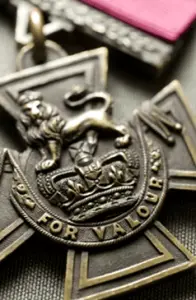 for those who shaped their homes and families despite their shattering experiences?
Where is the march-past for all those parents and sisters, those friends, who devoted themselves to those who returned, changed forever?
The Gospel speaks of remembering, of the God who refuses to forget us. Jesus broken on the cross identifies with all those who are broken; this sacrifice of God is not to win a beachhead, but to heal and restore all whose lives are shattered.
We are disciples of a God who heals, forgives and restores – a God who desires peace to break out everywhere. We bear witness to this God in the face of a history shaped by war, remembered and forgotten.
We must never forget those who served and sacrificed. We must always remember those who are forgotten by history – those obscured by the ANZAC myth – who discovered courage in other ways; who returned broken by shell and circumstance; who tended their loved one for the generations of peace; who found the myth too much to inherit.
So, God of Peace, disarm our trust in power,
teach us to coax the plant of peace to flower.
May we, impassioned by your living Word,
remember forward to a world restored.