Our New Word: “Impuissance”
As the media – and other – dogs are now barking for this current incarnation of government, and every word of the Prime Minster and his cabinet is forensically examined and criticised, I recall a Lateline interview several incarnations prior where the commentator being interviewed spoke of that…
As the media – and other – dogs are now barking for this current incarnation of government, and every word of the Prime Minster and his cabinet is forensically examined and criticised, I recall a Lateline interview several incarnations prior where the commentator being interviewed spoke of that particular Prime Minster being unable to get any “media traction”, and how he was powerless to change it. That earlier incumbent was vulnerable to a range of forces, most specifically the voters. I remember the interview because it was a conversation about power, or the lack of it. Someone who was both accustomed to power, and expected to wield it, was losing it and had no idea what to do. Nor did anyone else, it seemed.
Powerlessness. Or our new word: impuissance.
When Pope Francis began his new role, he immediately began to eschew many of the flash trappings associated with the Papacy – little car, modest apartment, eating with the workers in the Vatican café …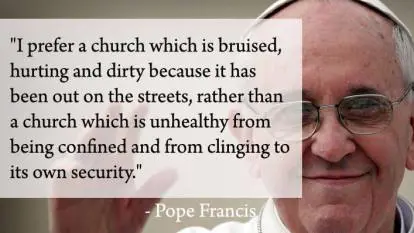 then more radical acts like washing the feet of prostitutes in Holy Week, rather than the cardinals’; embracing those with disease and disability, thus exemplifying the astonishing hospitality of God.
As we journey nearer to the cross, there is the astonishing notion of Jesus choosing to hand power over to others. Not only power to act for themselves, but power to act against Jesus. The Son of Man will be handed over to the chief priests and the scribes, and they will condemn him to death; then they will hand him over to the Gentiles; they will mock him, and spit upon him, and kill him…
When the central image of our faith is a cross – a crucifix – we need to explore more about powerlessness because of what God chose in order 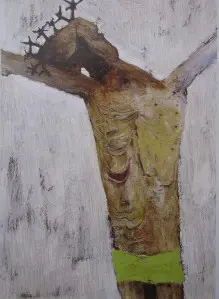 to save. We need to consider our own vulnerability, if only because God chose vulnerability to restore us.
We can use any language we like to imply that Jesus had power on the cross, but when he cries out his forsakenness, what else can we understand but Jesus, vulnerable and entirely impotent to save himself?
It’s hard to understand and harder to believe that God would live – and die – in such a way. This is why Peter objects, why the disciples twice more miss the point entirely, and why this story is, as Paul declared “a stumbling block to Jews and foolishness to Gentiles.”
We are much more comfortable with Jesus’ power to transform water into wine, to heal broken people and to walk on water, but this is precisely the point. The One who can do all these things, who was present at the foundation of the earth, has chosen weakness, impuissance, to declare himself most completely to the world.
In a world where power is honoured, even worshipped, at the heart of our faith stands a stark contrast.
But perhaps, for those who are weak, to hear that God knows what wea kness is like, means something.
Perhaps, for those who are vulnerable, to comprehend that God chose vulnerability over control, means something.
And perhaps, for those who feel forsaken – by friends, or family, or even God – the knowledge that Jesus has been forsaken might even give hope.
We know the hope of God rests in more than crucifixion. We need to stay at the cross awhile to appreciate its potency. And then we move through Saturday silence to Sunday’s wonder. This is because our entire hope rests here, with the assurance that after crucifixion and all is silent … after three days he will rise again, bringing healing to brokenness.