Palm Sunday Pragmatist
In my rare excursions to Sunday School, I remember that the Palm Sunday story had these hints of mystery about it; why did the owners of the donkey simply hand it over to two blokes – were Jesus’ words that powerful? And why did the crowd leap to their feet, throwing excess clothes and branches
In my rare excursions to Sunday School, I remember that the Palm Sunday story had these hints of mystery about it; why did the owners of the donkey simply hand it over to two blokes – were Jesus’ words that powerful? And why did the crowd leap to their feet, throwing excess clothes and branches on the ground – was Jesus’ appearance that magnetic?
The temptation to make all of Jesus’ actions mystical, or miraculous, is understandable, but risky. When we view the ministry of Jesus only through a lens of mystery, we can miss important aspects of t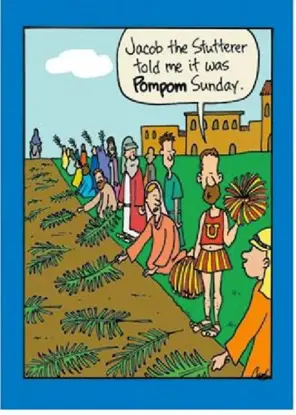 he event. Sometimes Jesus was clever, or discerning, or planned ahead.
Our community art installations in Southside and the Council foyer are two (marvellous, exciting) ways of engaging with our community.
It’s a form of public theology, where we think out our faith in a public sphere, in conversation about issues in our contemporary society. Hopefully, people from our community will celebrate, or refuse, or question, some aspect of what we offer, and we can move from an encounter to a relationship, where we can talk about those things which matter most.
What if Jesus’ action on Palm Sunday was an art installation, and not a series of mysterious happenings? What if purloining the donkey, and Jesus’ arrival, and the response of the crowd was an elaborate form of Ancient Near Eastern street theatre?
Consider the art work on our wall; Jesus’ dramatic arrival is set in direct contrast to the arrival of Roman troops under Pilate’ s leadership. Look at the massed gathering of followers and the ordered entry of armed soldiery. Donkey, not chariot; palms, not spears; men, women and children ready for worship, not soldiers prepared for war.
The mastery of the prophet echoes that of the dramatist, or the artist: to live a life, to enact or speak a word that challenges, confronts, or confirms.
When a Maule’s Creek farmer chains himself to his gate to protect his land and proclaim his opposition to coal seam gas drilling; when a Burmese woman speaks from her home of imprisonment each Sunday for fifteen years; when Tim Minchin sings his latest song, or two women scale the Sydney Opera House unfurling a banner, can we hear a tiny echo, perhaps, of donkeys and crowds and the Son of God?
Jesus draws attention to himself and, in the same moment, to the powers that deny and oppress. This calculated choice led to the weekend w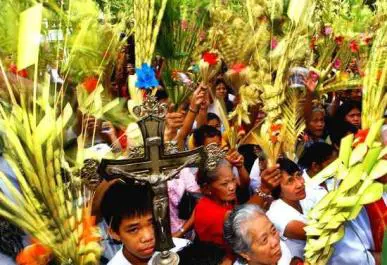 hich changed both history and creation; proclaiming a new kingdom, where forgiveness, justice and life surpass violence and vengeance.
As we enter this week of weeks, as we follow Jesus through the Jerusalem gate to the abomination of Golgotha and the wonder beyond, let us recognise and declare that we are citizens of the city of God, parables of God’s hope for all the world.