Prophet Driven
At the Tamworth episode of the ABC programme, Q&A, the most potent questions were from people who found themselves feeling powerless in the face of government action, or inaction. There was a farmer whose property was in crisis from gas in their groundwater, a mum caring for her ill child while…
At the Tamworth episode of the ABC programme, Q&A, the most potent questions were from people who found themselves feeling powerless in the face of government action, or inaction. There was a farmer whose property was in crisis from gas in their groundwater, a mum caring for her ill child while battling with inadequate mental health services, and a woman who live s with “third world communication services” fifteen minutes from Tamworth Post Office.
They, and many others, appear to believe that government has a responsibility to attend to the concerns of those who are most disadvantaged. There was no time to explore questions of poverty and unemployment in rural and regional communities, or the disturbing level of domestic violence and suicide.
On rural properties from the coast to the western ranges, farmers in eastern Australia are locking their farm gates to prevent access to those who want to drill for coal seam gas. In recent weeks our whole community has been disturbed by the punitive actions of some dairying conglomerates in relation to our dairy farmers.
In both the United States Republican election debacle and in Australian politics, immigrants and refugees are being blamed for simultaneously taking “our” jobs and lazing themselves in the unemployment queues. Walls, rejection and punishment are mooted as part of political platforms in two of the wealthiest nations in history.
If only the Scriptures had something relevant to say, and not just the nice Jesus stuff about loving your neighbour, or whatever.
A small farmer is approached by a multinational to sell his land and he refuses, so the CEO slanders him publicly – social media, memes, texts, the whole lot – gets the courts and politicians on side, and the farmer is murdered by an angry crowd as a result; his wife and children lose the property.
The farmer’s name is Naboth and God is furious on his behalf, seeking justice and even retribution. A spokesperson, Elijah, is sent to tell the CEO about the consequences of his evil, this double injustice, and both sin and repentance work their way in another evidence of God’s preferential option for the poor.
Do we think injustice, the misuse and abuse of power is new, or limited to th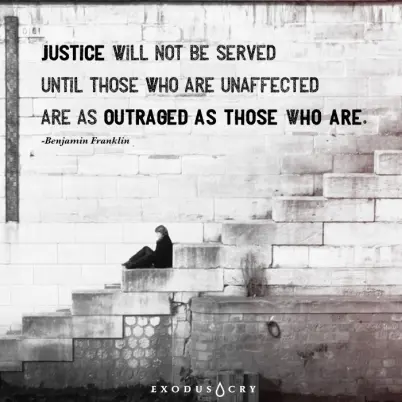 e modern age?
When some disciples play down “social justice”, or polarise it against “evangelising”, they are deliberately obscuring the point of the Gospel. Righteousness and justice are the same words in scripture; we don’t get to play one off against the other.
All too easily we find our place with those who have wealth and power. It’s convenient to argue, as many politicians do, that “nothing can be done”. But it’s not the gospel.
We believe in a God of justice, especially for those who have least. We believe that God calls us to voice, to action, to prayer, to advocacy for those who most need it. And we believe that serving food to a hungry person in the name of Jesus feeds their soul and their body.
We believe in a God who restores, heals and forgives.
We are called to be Spirit-driven prophets in a profit-driven age.