Purity & Impotence
What are those things which make me uncertain, even nervous? When I was a child, it was my father coming into the room, looking at me and saying, “We need to have a chat.” It is when the Waratahs have a game against a lowly placed team, which will determine their finals chances, or when
What are those things which make me uncertain, even nervous?
When I was a child, it was my father coming into the room, looking at me and saying, “We need to have a chat.” It is when the Waratahs have a game against a lowly placed team, which will determine their finals chances, or when the weather reporter says it’s going to be a wet month/season ahead …
When I hear a Christian community declaring how they are not influenced, indeed they remain untouched “by the world”, I also feel quite disconcerted. It has been happening since the New Testament church, but it seems quite prevalent now, with the rise of the Christian community schools, a select percentage of home schooling communities, the significant grow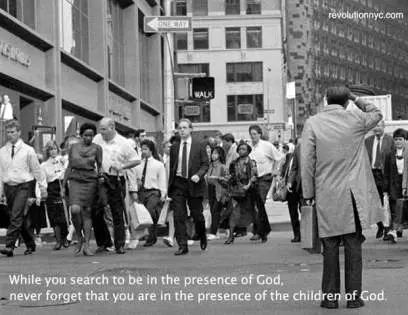 th in faith communities and churches (Tamworth now has over thirty-five) and the stereotype “Christian values” voiced in politics.
What is, perhaps, most disconcerting about the claim of apparent purity is the black and white theology which accompanies it, tolerating no alternative. “Certainly, only the impotent are pure”, Gough Whitlam stated years ago, talking about those who refuse to engage with the political process, or simply stand on the sidelines offering advice. Purity of theology may be possible, but if it is a reflection of a faith community which refuses to engage with the wider community, a church which stands on a hill, isolate by choice, then the purity is style and not substance.
The deep reality of God’s action in Jesus is that he was one of us. This fully human incarnation of God engaged with our world by living – and dying – within it. Meals and markets, weddings and streetscapes were all reflections of Jesus’ embrace of who we are. As such, he spoke and acted from within that embrace, not from some balcony above the madding crowd.
Paul’s frustration with the Galatian church reflects a faith community which had polarising rules for discipleship, rules which had far more to do with history and tradition that it did with the realities of living out faith in their context.
We may have a belief on social and environmental issues, on community needs, or political direction; we may have a clear understanding of Jesus’ place in world history and the salvation of humanity; we may be confident that faith is indispensable to be truly human. What does that mean if we refuse to engage in our community? What does that leave us if we keep our beliefs and hopes secreted from all contact?
We ae disciples of Jesus Christ, who stepped into the world, not frolicked on the margins. If what we believe can’t endure contact, we need either to reconsider, or redevelop stronger reasoning and argument. We watch the early church adapt to the world in which it was established, in which it grew and thrived.
We are called to be disciples of Jesus in the world for which Christ died and was raised. Discipleship is not a spectator sport, it is the life we are called to live, in the embrace of the Spirit, moving before us.