Reflections on Rugby & Mark’s Gospel
In this season of the Rugby World Cup, it seems only appropriate to introduce two of the signal moves in discipleship – the dummy and the sidestep. [For the non-Rugby aficionado, a dummy when a player pretends to pass the ball to another player, fooling the opposition and hopefully gaining ground. A…
In this season of the Rugby World Cup, it seems only appropriate to introduce two of the signal moves in discipleship – the dummy and the sidestep.
[For the non-Rugby aficionado, a dummy when a player pretends to pass the ball to another player, fooling the opposition and hopefully gaining ground. A sidestep is when a player with the ball appears to be running on one angle and then steps to another “sidestepping” around the would-be tackler.]
In this Gospel story, the ball carrier is a man with considerable wealth, who approaches Jesus and throws a dummy, “Good teacher, what must I do to inherit ete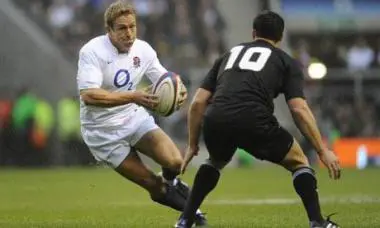 rnal life?”
Jesus doesn’t fall for it, tackling him head on. “You know the rules. Get on with it.”
And then the attempted sidestep. “I’ve done all these things since I was a kid.” Jesus tackles him again, takes the ball and lets me push the allegory too far, “Walk away from everything, and instead walk with me.”
Full time.
In an encounter with Jesus, bracketed by little children and blind beggars embracing God’s kingdom and disciples stumbling over their own theological clumsiness, we meet a wannabe disciple who is too clever – self-righteous? – for his own good. Can we detect a hint of us?
If we tick all these boxes, will we get a front row seat?
If we work / pray / preach / give / worship / believe hard enough …?
We have all the measures for accomplishment in our lives, and many of them are valuable – hard work and faithfulness, integrity and service. These are reinforced, as they should be, in all aspects of our community.
As it always has been, money is a measure of success, or good fortune. But not in God’s economy. God’s economy treasures the “little ones”, the children, the beggars and the outcast before anyone else. And the rich are squeezing themselves through pinholes in order to be saved.
Then who can possibly be saved?
It’s about God, not about us.
God desires to save us, not for us to obey, or serve, or worship, or sidestep our way into God’s kingdom.
With God, everything is possible.
We don’t have to sidestep Jesus in order to be saved, or to sell God a dummy. God is already convinced about us in love: our value, our beauty, our lives. Each time we come to Jesus, we learn a little more of what this conviction looks like; that following Jesus is not proving ourselves to him, but discovering ourselves in him.
What holds us back from experiencing the fullness of God’s salvation? Perhaps we find it hard to believe that bringing nothing to Jesus but ourselves is, in fact, all we have to bring. And all that Jesus desires.