Thomas, Doubt & Climate Change
Climate change. (pause) Slight rise in blood pressure for some. (pause and breathe …) There often seems to be just as much global warming having the conversation about climate change as in the issue itself. People will pull statistics from anywhere to justify their feelings, their beliefs, their…
Climate change. (pause)
Slight rise in blood pressure for some. (pause and breathe …)
There often seems to be just as much global warming having the conversation about climate change as in the issue itself. People will pull statistics from anywhere to justify their feelings, their beliefs, their actions, their concerns. However, unlike many scientific issues, people seems to have a personal stake in this one and enough thermal energy can be generated from one argument to power a small business.
I wonder why?
I suggest because, at its core, climate change is about more than climate, it’s about behaviour and culture change. If I accept the reality of a warming climate, then I will have to alter my behaviour and encourage others to do the same, for the sake of my grandchildren and for the sake of the planet. If I don’t accept it, I can keep going as I am.
If I accept it, I have to change how I live.
In the chaotic whirl in the week after Jesus’ death and resurrection, stories are multiplying. Empty tombs and mysterious encounters are matched with disbelief, competing tales and media releases from the temple and Pilate’s soldiers [Mt. 28.11-15]. Flustered disciples are both excited and frightened, and entirely unsure about what they are supposed to do next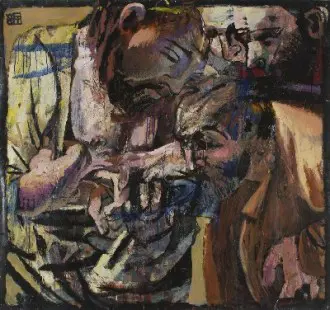 .
If this If we accept this, everything changes.
Which is precisely where Thomas stumbles into the picture. The blessing and breath of peace which Jesus offered his disciples were not received by the absent Thomas. The display of the risen Jesus’ wounded hands and side had not been seen by him. The gift of the Holy Spirit and the vocation of forgiveness offered to the others were not yet in Thomas’ hands.
So, when the news came of resurrection, from some deep reservoir came his response. Thomas knows, that if this story is real, everything will have to change, starting with himself.
Thomas’ doubt arose because of the implications of accepting a crucified, risen Christ. Already Jesus was talking about forgiveness, not revenge. A revolution based on life and restoration, not death. Those who were being sent were to echo how Jesus had been sent – as parables of God’s healing, God’s renewal, God’s holiness, God’s reconciliation.
Immediately afterwards, it seems that they tried to return to fishing, to their old patterns, but Jesus called them back to life. [Jn.21.1-20] The path on which they had begun was not for a moment, but for always. Nothing could remain the same.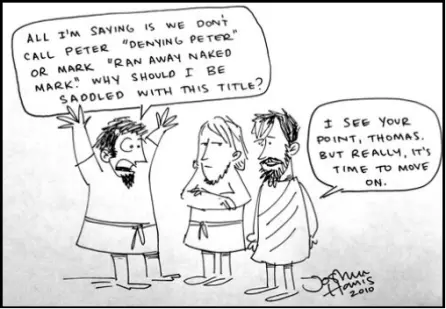
Paul understood it, when he said, If anyone is in Christ there is a new creation, the old has passed, behold the new has come. [2 Cor.5.17] The transformation was not only for Thomas and his friends, but for their relationships, their work and their worship, how they voted, how they lived, how they cared for those they loved and those they found it hard, even impossible, to love.
How shall we, who have no opportunity to see the risen, crucified Lord, respond to this story? Dare we risk ourselves in the scarred hands of Jesus, offering forgiveness to those who hunger for it? If we accept this resurrection, we are no longer who we were.
There is no other way.
Christ is the only way.