Windmills & Forgiveness
I have always been quite fond of Don Quixote. Not the romanticised baritone from Man of La Mancha, but the hopeful, chivalrous character offered by Cervantes. The expression “tilting at windmills” comes from this wonderful tale, as our hero imagines he see giants threatening a community and charges…
I have always been quite fond of Don Quixote. Not the romanticised baritone from Man of La Mancha, but the hopeful, chivalrous character offered by Cervantes. 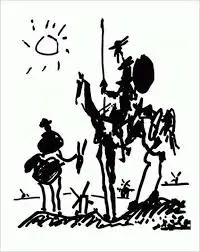
The expression “tilting at windmills” comes from this wonderful tale, as our hero imagines he see giants threatening a community and charges on his ageing steed to challenge them. The “giants” are, of course, not. And our beloved knight errant is ridiculously outmatched by the machinery of reality.
Discipleship can feel, on occasion, as if we are jousting with giants, real or imagined. The challenges of bearing witness to our faith, or making sense of our faith in our extraordinary world, loom large on our horizon.
As we are confronted this week with testimony at the royal commission, the punishments for acts related to terrorism, the growing drought in our region and the apparently unhindered growth of domestic violence in our community, we may be inclined towards the real fear expressed by Don Quixote’s companion, Sancho Panza. Shall we take arms against this sea of troubles, believing that our strength and faith alone can end them?
This can be too much for us, so we turn off the news, or play the denial game and focus only on our immediate circle of safe relationships. This is understandable, but it is not how we are called. Where, then, shall we turn?
As we move deeper into the Lord’s Prayer, we are immersed in an understanding of forgiveness which is both grace unmeasured and the response of our discipleship.
Forgive us our sins,
as we forgive those who sin against us.
This is not only about the immediate relationships we have, with God and each other, but about our world and the desperate need for forgiveness and relationships restored. The old version of the Prayer used the word “trespasses”, showing how sin can trample on what is most valuable to us, how boundaries are broken.
This stanza reveals the truth of God, our world and us. As always, the first act is with God: God’s forgiveness, God’s act to restore and reconcile. Our forgiveness and our attempts to forgive are always a response to what God offers us in Jesus.
Forgiveness is not a passive act, but one of courage, healing and restoration. It will frequently be costly, but it will always give life. Forgiveness is honouring the wounds of those who are hurt, and testifying to the possibility of lives made whole. Forgiveness amplifies the cry for justice, calling trespassers to account, and offering release to the one for whom justice is critical. Being forgiven and forgiving leads us away from evil’s lure into life.
The impotence of Quixote’s chivalry is not ours. All our forgiveness is sponsored by God’s. Every act of reconciliation begins at the cross.
The Lord’s Prayer is as articulate now as when Jesus first taught his disciples. We are all in the hands of God – whose reign is at hand, who feeds us each day and who offers forgiveness for all our world.